Issue 009 | Why High Performers Plateau: The Invisible Ceiling Most Founders Never See Coming
The Ceiling You Built Yourself
At some point, every serious founder or leader notices it. The effort stays high. The discipline hasn't slipped. The hours are still there. But the results have stopped moving in the same direction they once did. Revenue stabilizes at an uncomfortable number. Team performance flattens. The energy that used to produce breakthroughs now just maintains the status quo.
This is what a performance plateau actually looks like, and it almost never has anything to do with effort.
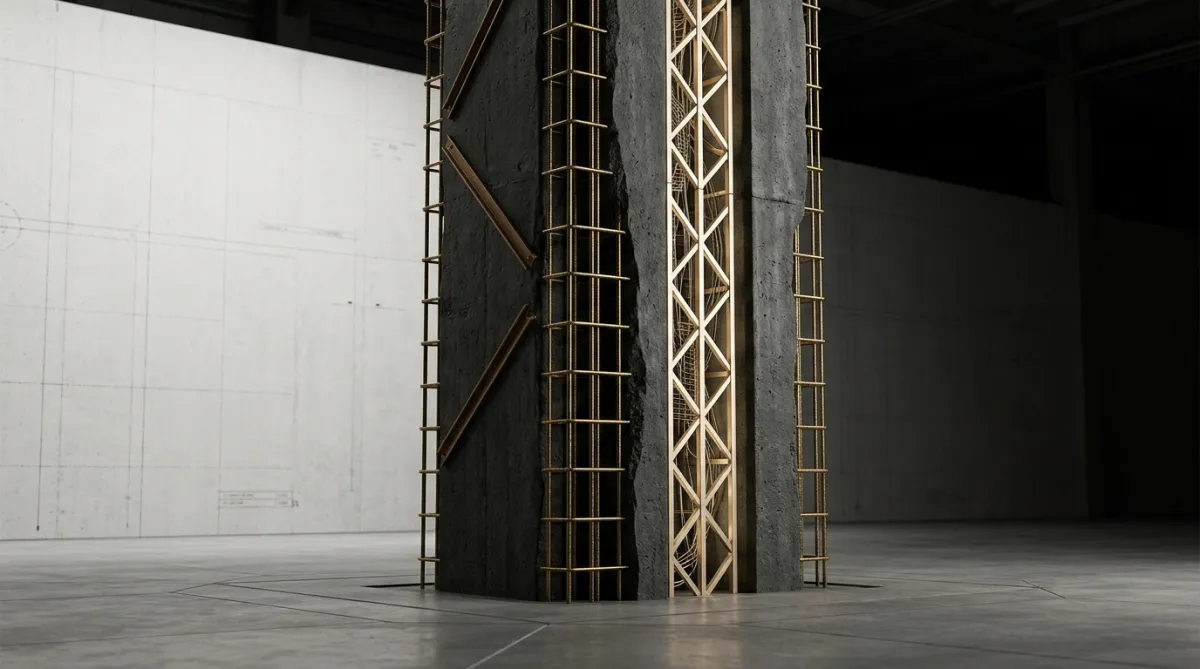
High performers plateau not because they stop working hard but because the system that produced their early results has reached its natural capacity. The same behaviors, mental models, and identity frameworks that drove them from zero to their current level are now the ceiling, not the floor.
That distinction matters enormously. Because if you believe the problem is effort, you will keep pouring fuel into an engine that needs to be redesigned, not refueled. For a broader look at the patterns that quietly limit founders and leaders, the WKYWKY Insights library documents many of them in depth.
Why Capable Leaders Miss It
The plateau is particularly hard for high performers to diagnose because their strengths are the source of the problem. The very qualities that drove their rise, relentlessness, self-sufficiency, high standards, comfort with pressure, have been so consistently rewarded that questioning them feels dangerous.
So instead of examining the system, they double down on it. They work harder. They hire more people. They read another book. They attend another conference. None of it moves the needle because none of it addresses what is actually limiting them.
There is also a psychological dimension that compounds the problem. High performers tend to anchor their identity to performance. When results plateau, that feels like a personal indictment rather than a systems signal. The natural response is to defend the existing system rather than examine it.
This is not a character flaw. It is a predictable consequence of being rewarded for a particular approach long enough that the approach becomes invisible. You stop seeing it as a choice. It becomes just how things are done.
The Hidden Cost of Staying at the Ceiling
A plateau is rarely neutral. Holding position in a competitive environment almost always means gradual erosion. Markets shift. Competitors evolve. Teams sense stagnation even when leaders don't name it. The organizational energy that used to be directed toward growth quietly redirects toward stability, and stability without momentum is a slow decline disguised as consistency.
There is a personal cost as well. Leaders who are stuck at their ceiling without understanding why often begin to exhibit predictable patterns: micromanagement as control reasserts itself, shorter decision cycles driven by frustration, increasing isolation as the gap between their internal experience and their external presentation widens. Over time, this erodes exactly the judgment and relational capital that got them to the ceiling in the first place.
Research published in Harvard Business Review on high-performing teams found that high-performing teams share two traits above all: connection and courage — the willingness to take risks, name hard truths, and have the difficult conversation instead of avoiding it. That risk-taking capacity doesn't come from individual output; it comes from how the team relates to itself. When the leader stops modeling that courage, the whole system stalls with them.
The Root Cause: Identity Running Ahead of Infrastructure
The most precise way to describe a high performer's plateau is this: their identity has not kept pace with the level they are trying to operate at.
This is distinct from a skills gap. Skills can be trained. A misaligned identity quietly sabotages every new skill that gets layered on top of it. The founder who built a seven-figure business through pure force of will and individual output now needs to operate as a leader of systems and people. But if his identity is still that of the person who does the work himself, every delegation attempt will feel wrong, every team failure will pull him back into execution mode, and every strategic conversation will subtly drift toward tactics.
He is not incapable of leading at the next level. He is running an identity that was built for a previous level. The ceiling is not external. It is internal.
Gallup's extensive research on workplace engagement and managerial effectiveness points consistently to one finding: the transition from individual contributor to leader of people is one of the most underestimated identity shifts in organizational life. Most people make it structurally but never fully make it internally.
A Diagnostic: Where Is Your Ceiling Coming From?
Before applying any corrective strategy, a founder needs an honest read on the actual source of the plateau. Most ceilings trace back to one or more of these four root causes:
1. The Competence Trap. The skills and behaviors that produced your early success are now over-indexed. You are extraordinarily good at something that is no longer the primary constraint. The business doesn't need more of what you're best at; it needs something you haven't built yet.
2. The Identity Lag. Your internal operating model, the assumptions about how work gets done, what leadership looks like, and what your role should be, is calibrated to a version of your business that no longer exists. You have the title of CEO but the instincts of a founding operator.
3. The Relational Blind Spot. The quality of information you receive has degraded. People around you have learned, consciously or not, what you want to hear. Your decisions are being made with filtered data and you can't see the filter.
4. The Capacity Illusion. You believe you are operating at full capacity because you feel fully occupied. But busyness is not a measure of strategic output. Many leaders who feel overwhelmed are actually underdeployed at the level that would move the business forward, because they are absorbing tasks and decisions that belong lower in the organization.
Identifying which of these is your primary constraint is not a comfortable process. It requires input from people who can see what you cannot, and willingness to hold your current model loosely enough to examine it.
How to Break Through a Real Performance Ceiling
The corrective path is not another productivity system or a different time-blocking approach. It is a deliberate reconstruction of the internal model that is creating the ceiling. That means three things in sequence.
First, surface the model. Name explicitly how you currently believe leadership works, what your role is, what success requires from you personally, and where you believe the business would break without your direct involvement. Most leaders have never stated these assumptions out loud. Surfacing them is the prerequisite for examining them.
Second, test the model against current reality. For each belief, ask: Was this true when I built it? Is it still true now? What would change if I operated as if it weren't? This is not about abandoning what worked. It is about determining whether it still applies at the level you are trying to reach.
Third, replace and practice the updated model. A new mental model does not install through insight alone. It installs through repeated decisions made from a different set of assumptions. The leader who is transitioning from operator to strategist needs to practice refusing tactical decisions even when he could solve them faster himself. The practice is uncomfortable. That discomfort is precisely the evidence that the shift is real.
This process is not quick. But it is the only path that actually moves the ceiling rather than just rearranging what's beneath it.
What Staying Stuck Actually Costs
A performance plateau sustained long enough stops feeling like a plateau. It starts to feel like a permanent condition, like the limit of what's possible. That is the most dangerous phase. Not because the ceiling has become real, but because the leader has stopped questioning whether it is.
The founder who built something significant has already demonstrated the capacity to operate at a level that most people never reach. The plateau is not evidence that his growth is over. It is evidence that the model that produced his growth needs to evolve. That is a different problem, with a different and more specific solution.
If you are operating at a ceiling that effort alone hasn't been able to move, the question worth sitting with is not how do I work harder but what belief or identity pattern is setting the limit. That answer, once honest, becomes the actual work.
The ceiling is not made of market conditions or competitor advantages or team limitations. In most cases, it is made of the same mental models that created the floor. And mental models can be rebuilt.
If you are ready to get a clear-eyed look at where your ceiling is coming from and build a deliberate path through it, schedule a conversation with Joshua to explore what that work looks like in your specific context.


